
UK Ministry of Defence (MoD):
Transforming Defence Architecture Engagement

Client Overview: UK Ministry of Defence
The UK Ministry of Defence (MoD) safeguards national security and steers the UK’s defence strategy. It manages complex programs for the Army, Royal Navy, and Royal Air Force, and works closely with NATO and international partners.
To make sound decisions in this high-stakes environment, the MoD needs clear, shared frameworks, and smooth teamwork.
Seeking better engagement, the MoD adopted Sparx Systems Enterprise Architect and Prolaborate, tools that changed how its architecture teams communicate and collaborate.
The Challenge
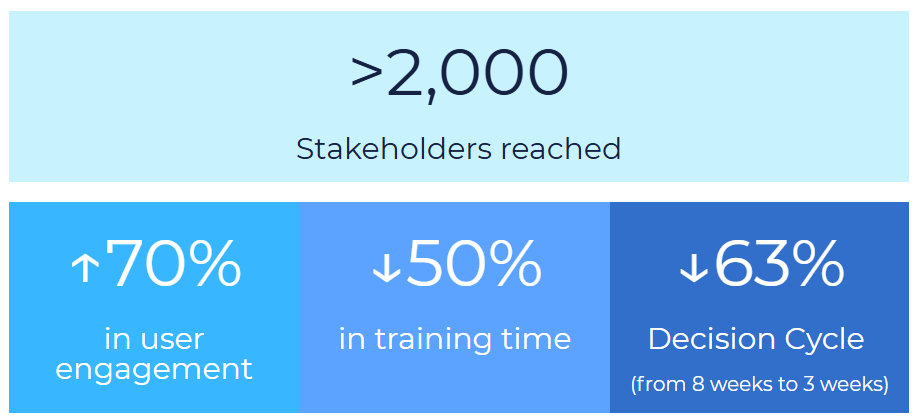
- Training that missed the mark: Thousands of soldiers needed to learn key frameworks like MODAF, TOGAF, NAFv4, but traditional training was slow and failed to connect theory to real defence needs.
- Low engagement: Architects created models that few outside their team saw. Key stakeholders, from commanders to engineers, couldn’t see how these models related to their missions or business decisions.
- Siloed tools: Each branch used separate tools, making it difficult to share diagrams and keep information up to date. Creating reports took too much manual effort.
Together, these challenges kept architecture work isolated and underused. The MoD needed a faster, clearer way to connect people, processes, and information.
The Solution
Sparx Systems Enterprise Architect became the MoD’s modelling tool, supported by Prolaborate – EA collaboration platform for the stakeholders.
The MoD architects focused on the following:
- Easy access: Anyone can now view dashboards and diagrams in their browser. Leaders didn’t need special software to stay informed.
- Collaborative reviews: Web-based discussions and review features let teams comment on specific diagrams and track decisions together.
- Consistent documentation: Custom templates allowed quick, standardised reports and training materials, generated directly from live models.
- Clearer roadmaps: Capability-driven maps linked big-picture strategy with daily work, so everyone could see how investment decisions supported defence objectives.
How it was done
Start Small: The MoD ran a pilot, loading existing models, publishing them via Prolaborate, and inviting broad review.
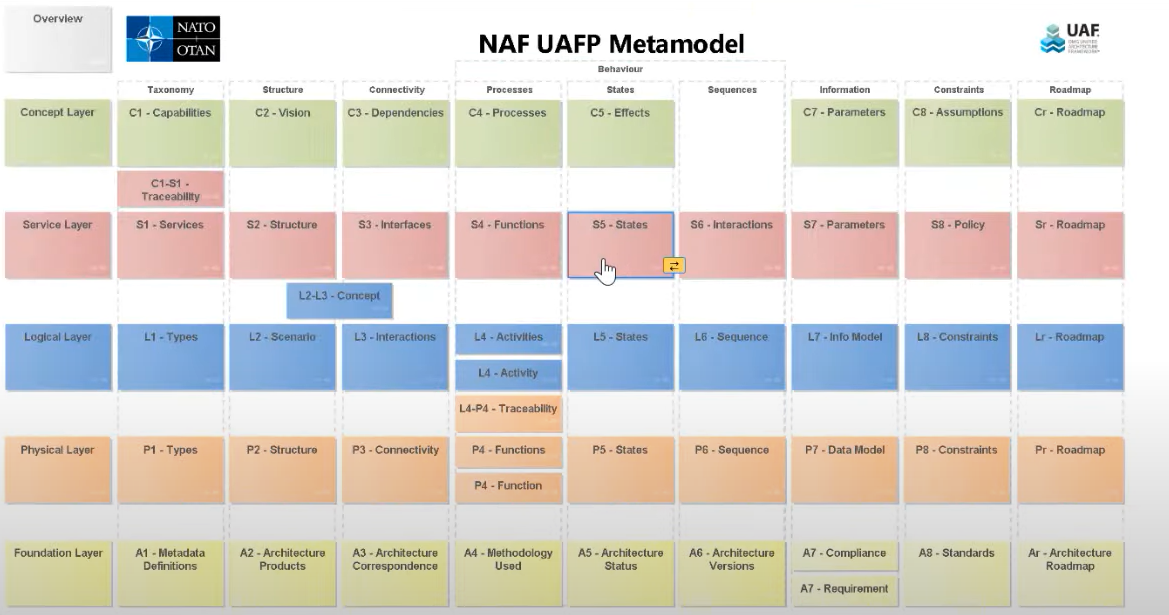
Teach by Example: Training became hands-on and interactive. Soldiers accessed diagrams relevant to their roles and saw how architecture relates to real scenarios.
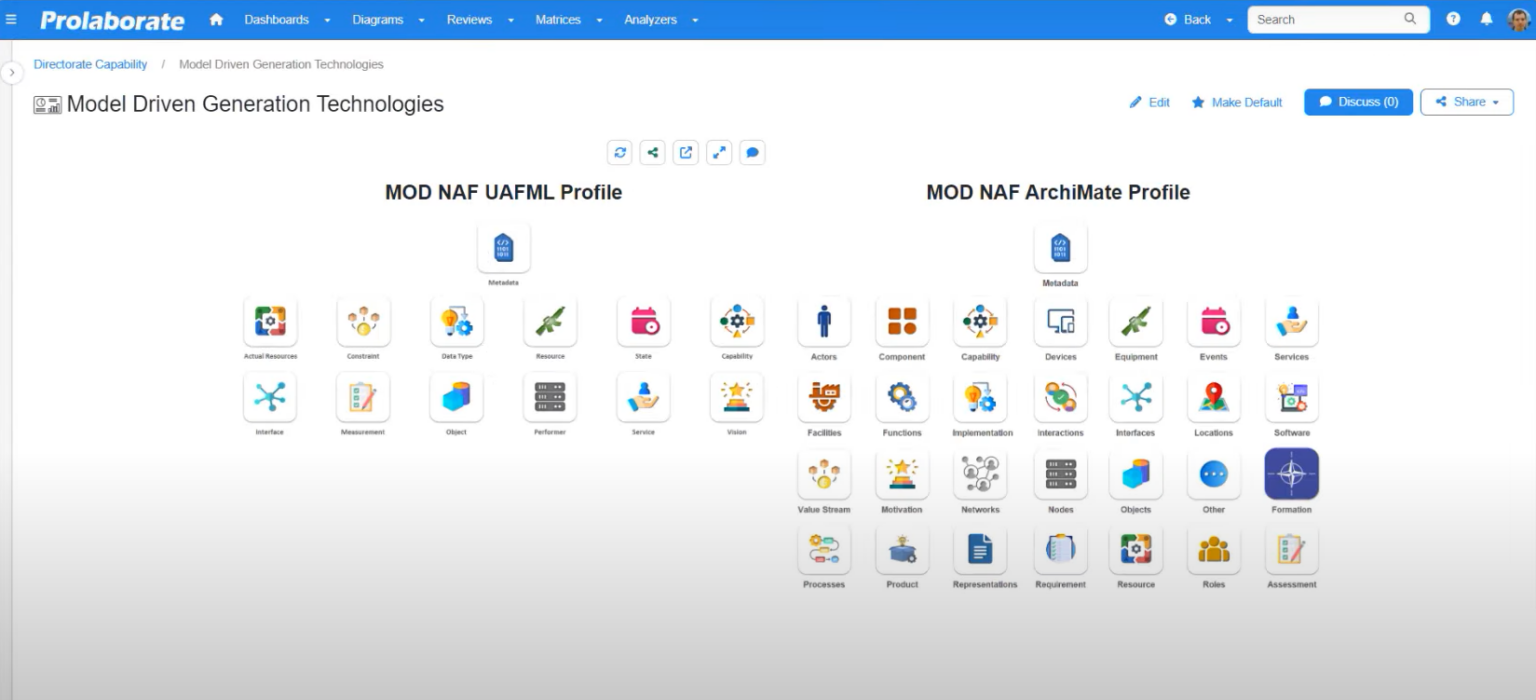
- Set Standards: A central team created templates and processes, making sure every branch worked in the same way.
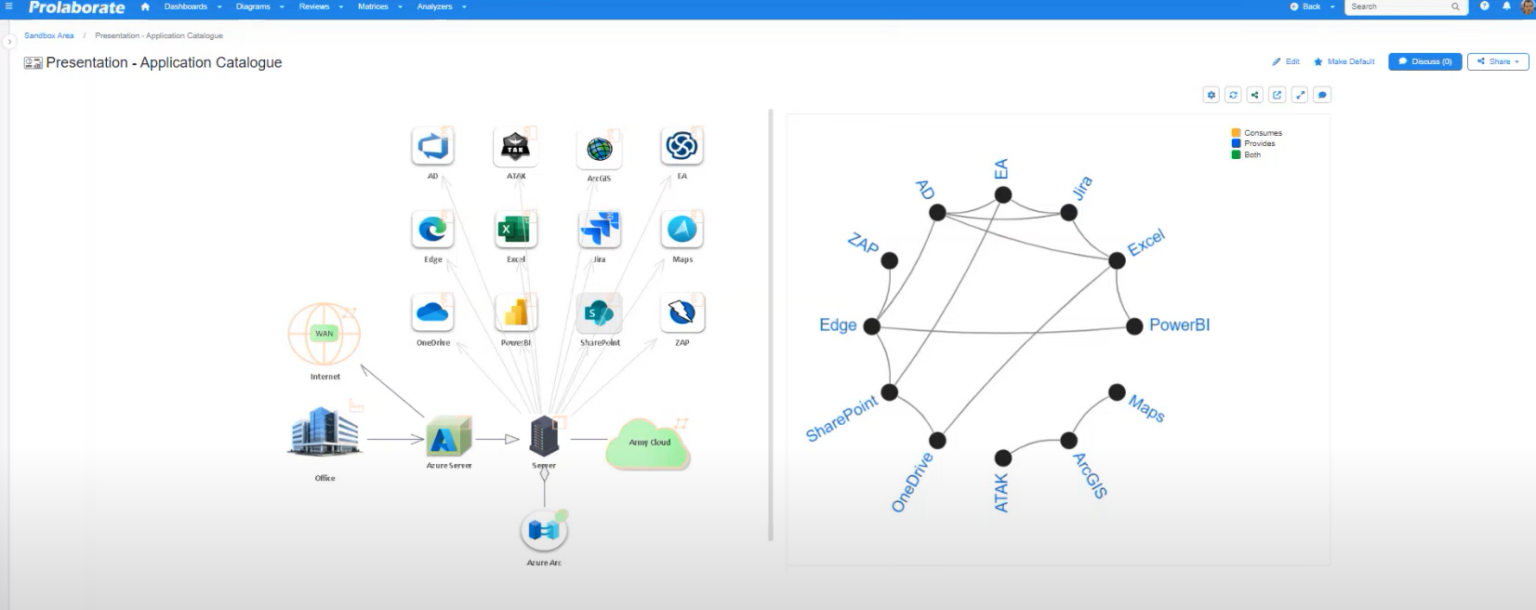
- Scale Up: After early wins, the new system rolled out across the MoD, linking with existing portals like Azure DevOps so teams could access live information in familiar spaces. Every review and change left an audit trail, making compliance and quality checks much easier.
The result
Why this is important
With clearer diagrams, simpler training, and open collaboration, the MoD turned architecture from an isolated technical exercise into a wide-reaching tool for defence readiness.
The change was about more than software. It was about connecting people – commanders, engineers, and trainees with the information and context they needed to make smart decisions.
Q&A
How did Prolaborate improve collaboration?
Prolaborate lets stakeholders view Enterprise Architect models in their browsers, comment directly on diagrams, and see all reviews in one place. No more static HTML or endless emails – everyone works from the same up-to-date model.
Can Prolaborate fit with existing systems?
Yes, it integrates with tools like SharePoint and Confluence, so live diagrams can appear in the systems people use every day. Azure DevOps and Jira links can be enabled for traceability. Single Sign-On means secure, easy access.
How did the MoD make abstract frameworks clear?
Training modules linked frameworks to real-life operations. Soldiers could explore models starting with broad maps down to specific systems, always tying architecture choices back to mission needs.
Conclusion
The MoD’s experience shows that technology succeeds when it makes complex work easier to share, understand, and act on. By focusing on clarity and simplicity, not jargon, the MoD gave stakeholders the tools and common language they needed to keep Britain’s defences strong.
About SparxSystems Europe
Sparx Systems Pty Ltd (Australia) was founded in 1996 and is the manufacturer of Enterprise Architect, a globally successful UML modeling platform. Enterprise Architect is used for designing and building software systems, business process modeling and modeling any process or system. Enterprise Architect is valued by over 1 million users for its performance at an unbeatable price. Enterprise Architect is an easy-to-understand, team-oriented modeling environment that helps companies analyze, design and build systems that are accurately understood and documented. With the help of this tool, companies are enabled to collect and present the often very dispersed knowledge of teams and departments centrally.
SparxSystems Software Europe was set up in 2004 to provide the best possible Enterprise Architect service to the many customers in their language and time zone, supporting the entire German-speaking region with license acquisition, training and consulting. SparxSystems Software Europe is a business unit of the Lieber.Group.