
ECOMAI wins PENTA Innovation Award 2025
How SparxSystems Europe is paving the way for certifiable AI in embedded systems through model-based development
A major stage for a major idea: the European research project ECOMAI (Ecological Motor Control and Predictive Maintenance with AI) was honoured with the prestigious PENTA Innovation Award in October 2025. ECOMAI demonstrates how artificial intelligence can be deployed in safety-critical embedded systems in a transparent, certifiable and industrially scalable manner. It combines model-based systems engineering (MBSE), Explainable AI and energy-efficient edge hardware into an end-to-end development approach, making it a blueprint for the use of AI in regulated industrial environments. However, the project is by no means aimed at the next generation of large language models; rather, ECOMAI stands for a different kind of AI, namely Tiny Machine Learning (TinyML).
ECOMAI is a project within the Eureka Cluster PENTA, a European innovation network that promotes research and development in microelectronics and nanoelectronics. The aim of the cluster is to strengthen cooperation between industry, universities and research institutions and to jointly develop technological solutions to key challenges facing the economy and society.
The PENTA Innovation Award recognises projects that combine technological excellence with industrial relevance and ecological impact. The jury particularly acknowledged ECOMAI’s contribution to the sustainable and intelligent control of electric drives through the use of AI under real industrial conditions.
“The award also shows that Austrian engineering expertise is visible internationally and that targeted research funding pays off,” says Peter Lieber, Head of Business Development at SparxSystems Europe.
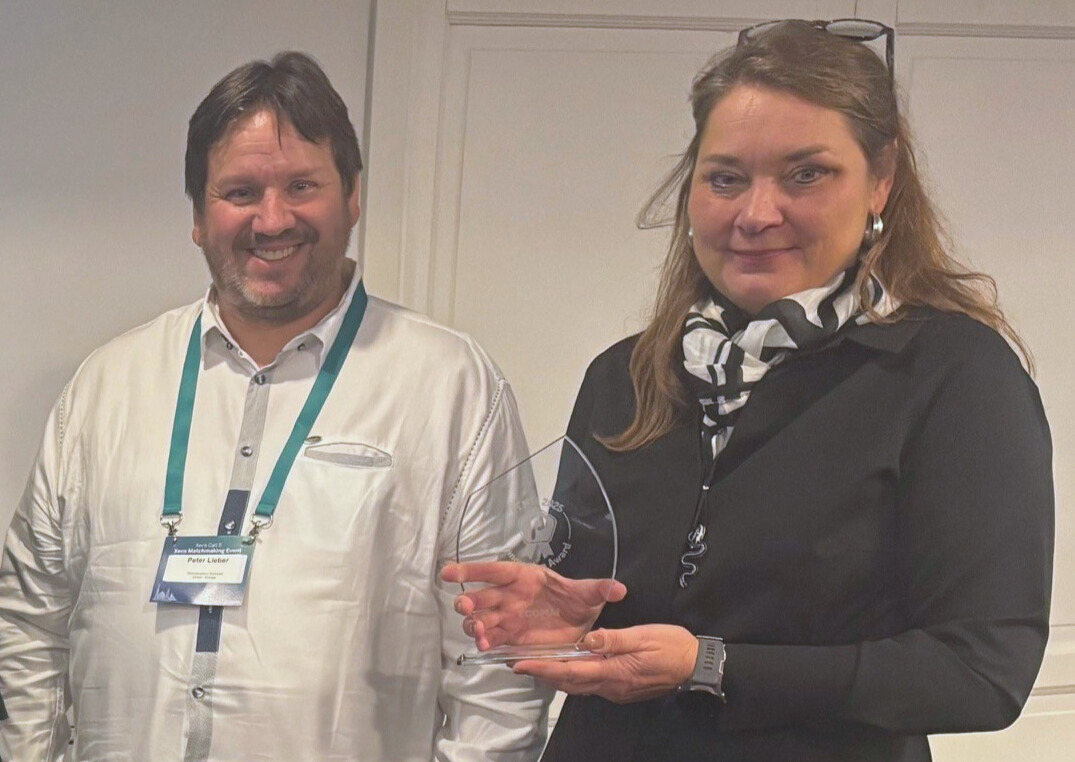
Peter Lieber, founder and Head of Business Development at SparxSystems Europe, with Salomé Wagner, ECOMAI project manager at SparxSystems Europe.
SparxSystems Europe as an enabler
Eleven partners from Germany, Austria and Turkey were involved in the project, including the semiconductor manufacturer Infineon, TU Wien and the Software Competence Center Hagenberg (see fact box). SparxSystems Europe played a central role in this context: as the methodological enabler, the company was responsible for the model-based system architecture and, with ECOMOD, created an end-to-end development framework that makes TinyML-supported embedded systems fully modellable, testable and certifiable for the first time.
Few topics connect digitalisation, sustainability and industrial efficiency as directly as the electric drive. According to studies, around 40 per cent of global electricity consumption is attributable to electric motors – from industrial manufacturing and transport systems to building technology – and this is associated with around 20 per cent of global CO₂ emissions. This is where ECOMAI comes in: by using edge AI, in other words artificial intelligence integrated directly into the drive, energy consumption, maintenance effort and CO₂ emissions are to be reduced significantly. The crucial point is that this intelligence is not developed as an isolated one-off solution, but as a reproducible and scalable approach for industrial series applications.
“For us, from the very beginning ECOMAI was not a conventional research project, but an opportunity to show how AI can be developed systematically and made manageable for industry. Model-based methods are the key to making AI systems transparent, understandable and maintainable over the long term – and that in turn is the prerequisite for bringing them into industrial series applications,” Lieber emphasises.

ECOMOD – the methodological heart
One of ECOMAI’s main objectives was to increase the energy efficiency of electric drive systems. Five per cent energy savings were defined as the minimum target – a figure that was clearly exceeded over the course of the project.
Over three project years (2022 to 2025), the consortium developed a comprehensive solution consisting of hardware, software and modelling platforms. SparxSystems Europe was responsible for the methodological foundation: the model-based design and simulation methodology ECOMOD, which served as the digital backbone of the project.
ECOMOD stands for “ECOMAI Modelling Toolbox” – a methodology developed by SparxSystems Europe based on SysML, a graphical modelling language for systems engineering. ECOMOD consistently transfers the model-based systems engineering approach to AI-supported embedded systems and combines classical system architecture with Explainable AI (XAI), in other words interpretable artificial intelligence.
By integrating Decision Model and Notation (DMN), neural decisions can be translated into understandable rule models – making it possible for the first time to establish end-to-end traceability from the requirement via the system model through to the test case. This is a central prerequisite for certifications and for the use of TinyML under regulatory requirements such as the EU AI Act or functional safety standards.
The breakthrough does not lie in the intelligence itself, because TinyML is already technically feasible today. Rather, it lies in its integration into modelled and certifiable development processes. Without a model-based methodology, TinyML has no practical relevance, because what cannot be certified cannot be marketed. ECOMOD closes this gap. “For us, the message is clear: ‘AI’ is interchangeable. TinyML is positionable. And certifiable TinyML with MBSE is differentiating,” says Lieber.
TinyML – the key technology for industrial AI
TinyML is not a miniature version of generative AI, but a strategic architectural decision: computing power moves back to the machine. While generative AI runs on powerful cloud servers or specialised ML accelerators and depends on permanent network connections, TinyML shifts AI inference entirely onto chips located directly at the point of data acquisition. This is relevant for functional safety because the decision is made within the system itself and does not depend on external services. At the same time, TinyML works on resource-constrained, low-cost hardware – all the way down to microcontrollers with unit costs below €1. Compared with LLMs, TinyML is therefore a much more cost-effective and energy-efficient way of using AI.
“ECOMAI has shown that modern microcontrollers already integrate mini neural processing units and can therefore execute efficient AI models for real-time motor control, predictive maintenance and other embedded applications directly at the point of data acquisition,” states Dr Daniel Müller-Gritschneder, Professor at TU Wien.
Electric motor and drive systems form the basis of almost all modern moving systems, but only a few of them currently integrate AI enhancements at the level of drive control. The results of ECOMAI therefore have considerable market potential. “These ultra-low-power and at the same time cost-efficient solutions form a market segment that is growing strongly and for which forecasts expect revenues in the billions over the coming years,” Müller-Gritschneder observes. Market studies such as the report “Artificial Intelligence (AI) Chips Market” assume an annual growth rate of 36.6 per cent for AI chips, while the market for motor control chips is expected to grow by around 8 per cent annually. And for electric drive systems and predictive maintenance systems as well, growth of at least 8 per cent per year is forecast.
This creates an alternative to cloud-centric AI architectures that is strategically relevant for industrial and safety-critical applications in Europe in particular.

Dr. Daniel Müller-Gritschneder, Professor at TU Wien
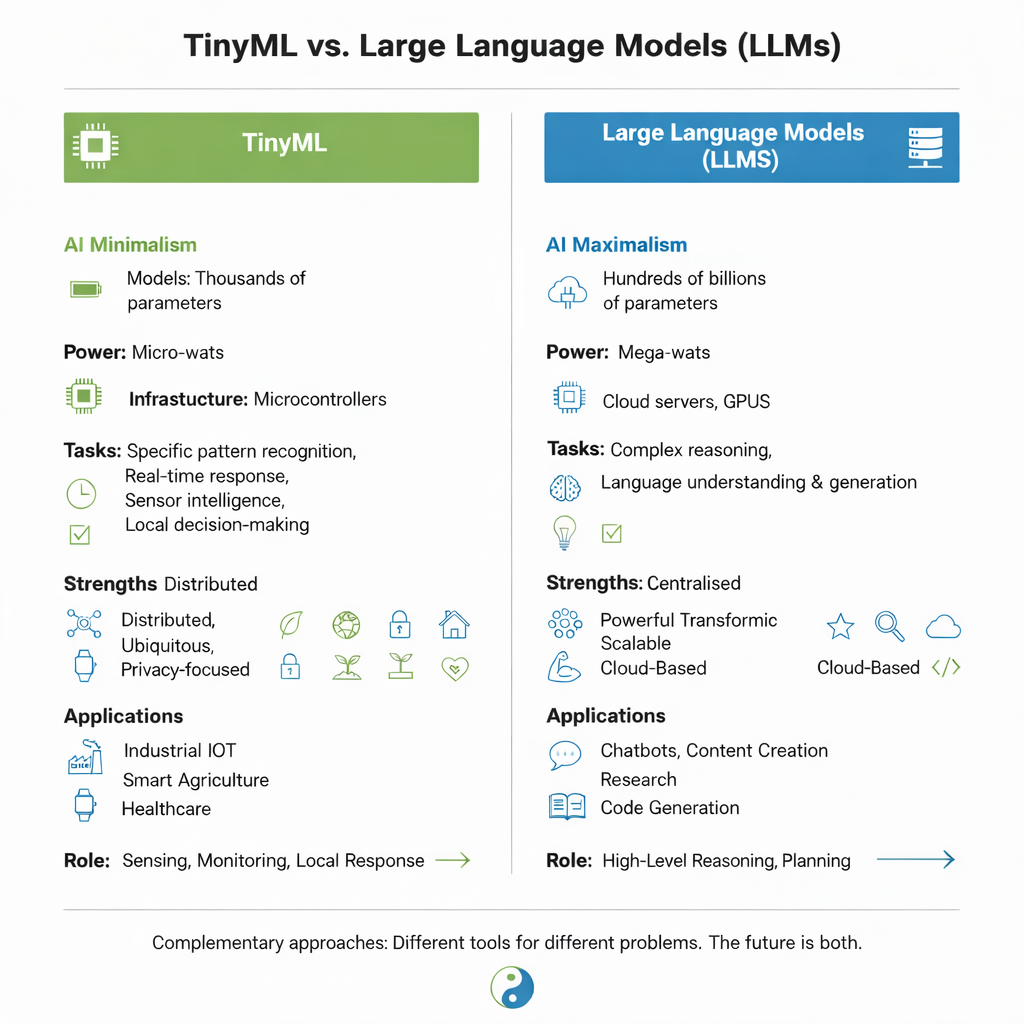
Source: Phani Bhushan Athlur/medium.com
A complete success for ECOMAI
ECOMAI met all key performance indicators defined in the project and also impressed in practical implementation. This was demonstrated by numerous demonstrators presented during the final PENTA review in September 2025.
Infineon presented a “Tiny Reinforcement Learning Agent” capable of running on standard microcontrollers and optimising motor currents in real time. This makes energy savings of around 7 per cent possible. In simulations, the Tiny Reinforcement Learning Agent showed improved disturbance suppression while simultaneously reducing energy demand. ECOMAI therefore demonstrates that learning-based control methods can also be used meaningfully on highly resource-constrained hardware without impairing energy efficiency.
The German companies Moteon and FEAAM demonstrated AI-based control strategies for permanent magnet synchronous motors (PMSM) that showed significant efficiency gains in the WLTP driving cycle (Worldwide Harmonized Light-Duty Vehicles Test Procedure). The methods used led to a 97 per cent reduction in the memory required, thereby making the practical use of AI in memory-limited embedded systems possible in the first place. Real test environments showed energy savings of 0.65 to 4 per cent compared with already highly optimised baseline solutions – a remarkably high figure in practice.
The Turkish company Albayrak presented a predictive maintenance system for railway sliding doors that detects failures up to 24 hours in advance. Sensors record temperature, humidity and vibrations; a learning AI identifies anomalies at an early stage and initiates maintenance measures before disruptions occur. System availability was thereby increased from 99.4 to 99.9 per cent – a measurable indication of the practical value of predictive AI maintenance. “AI-based condition monitoring as a solution for predictive maintenance increases the value of the system design and strengthens its competitiveness in the market,” says Necim Kirimca, Project Team Manager at Albayrak.
Further demonstrators ranged from an AI-supported ultrasonic sensor for process monitoring (usePAT) to an energy-efficient robot controller for rehabilitation applications (neuroConn). All applications were based on a common methodological foundation: the ECOMOD system architecture, modelled with Enterprise Architect from SparxSystems.
That is precisely where Peter Lieber sees the project’s real core. For him, the demonstrators are less the endpoint than proof of the viability of the approach. “The real success of ECOMAI lies in the fact that we have created a transferable development approach that can be scaled across different industries and applications – wherever AI is used on embedded hardware under clearly defined conditions.”

From research project to toolbox
With the successful completion of the project in September 2025, the next phase began for ECOMAI: transfer into industrial application. For this purpose, SparxSystems Europe has made the ECOMOD toolkit – including model templates, process definitions and profiles for Enterprise Architect – publicly available under the permissive MIT open-source licence. “SparxSystems’ approach is not to generate immediate product revenue from publicly funded research results,” says Lieber. “Our business model lies in courses, training and methodological support. Combined with the open toolkit, this creates a scalable package for companies that want to introduce AI into safety-critical embedded systems in a compliant manner.”
The toolkit was already presented prominently at embedded world 2025 in Nuremberg. At the consortium’s joint stand, the components on display ranged from specialised AI hardware and energy-efficient compilers through to the complete MBSE development kit. Initial industry partners have already integrated ECOMOD into their own development processes. Applications range from motor control and predictive maintenance through to the healthcare sector. ECOMOD is therefore developing from a research result into a field-proven development standard for certifiable AI on embedded hardware. “The combination of modelling, explainability and traceability not only creates trust in AI, it is the prerequisite for deploying AI economically in regulated markets,” says Lieber.
The project has also generated considerable academic output: eight Master’s theses, one doctoral thesis and seven scientific publications – including one paper that received a Best Paper Award – document the depth of research behind the demonstrators. Further training programmes are being established at universities, thereby creating new jobs.
“With ECOMAI, SparxSystems Europe has shown that model-based systems engineering is far more than documentation: it is a strategic key to transferring AI into industrial practice in an understandable, certifiable and sustainable way,” Lieber concludes.
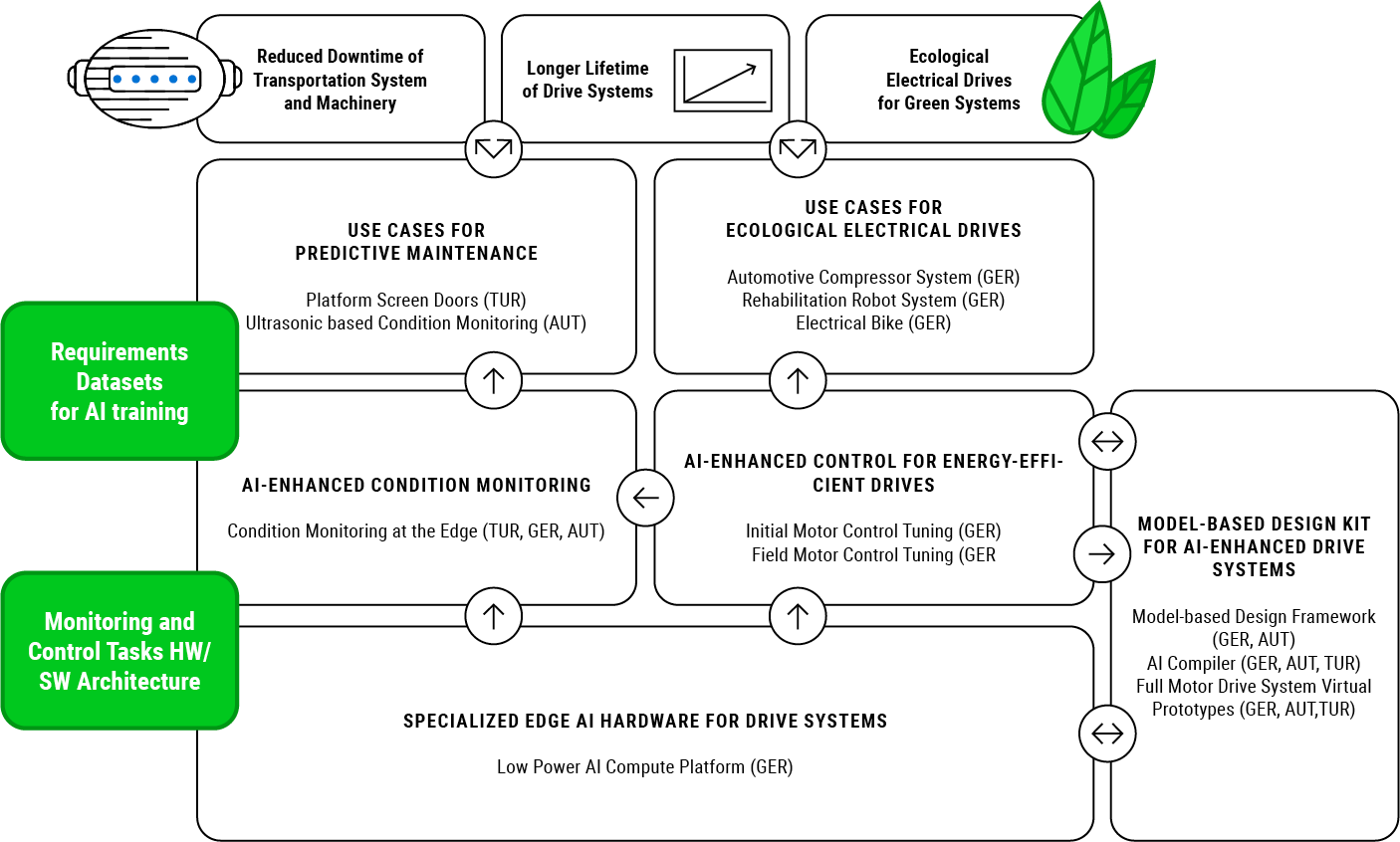
Results at a glance
-
All 13 project KPIs achieved – from simulation to a functioning prototype
-
Demonstrable energy savings in PMSM drives through AI-based control
-
Functional demonstrators for motor control, predictive maintenance, sensing and rehabilitation technology
-
Publication of the ECOMOD toolbox (open source)
-
Sustainable knowledge transfer through workshops and open documentation
Fact box
ECOMAI – Certifiable AI for embedded systems
Project name:
ECOMAI – Ecological Motor Control and Predictive Maintenance with AI
Programme:
EUREKA Cluster PENTA (AENEAS)
Duration:
May 2022 – September 2025
Project objective:
Development of an end-to-end, model-based approach for integrating AI into energy-efficient, safety-critical embedded systems – with a focus on transparency, certifiability and industrial scalability.
Coordinator:
Infineon Technologies AG (Germany)
Award:
PENTA Innovation Award 2025, presented on 9 October 2025 in Riga
Consortium partners and contributions
Infineon Technologies AG (DE)
Project coordination; development of an edge-AI-capable hardware platform and implementation of a “Tiny Reinforcement Learning Agent” for energy-efficient motor control.
Moteon GmbH (DE)
Development and integration of AI-based control algorithms for permanent magnet synchronous motors (PMSM), with a focus on real-time capability and efficiency.
FEAAM GmbH (DE)
Simulation and evaluation of electric drive architectures; evidence of measurable energy savings in the WLTP driving cycle.
neuroConn GmbH (DE)
Development of an energy-efficient robot controller for rehabilitation applications with AI-based control and safety-oriented data analysis.
Technical University of Munich (DE)
Lead partner for AI compiler technologies to reduce memory requirements and runtime; involvement in the development of a hardware chip prototype.
Technical University of Ilmenau (DE)
Research into model-based AI algorithms and simulation of edge-AI systems; scientific evaluation of the overall architecture.
SparxSystems Europe (AT)
Development of the model-based ECOMOD methodology as the methodological backbone of the project; integration of SysML, Explainable AI (XAI) and DMN in Enterprise Architect.
usePAT GmbH (AT)
Development of an AI-supported ultrasonic sensor for industrial process monitoring and real-time condition diagnosis.
TU Wien (AT)
Support for model-based system integration and validation; contribution to the ECOMOD toolchain as well as to course and training concepts.
Software Competence Center Hagenberg (AT)
Application-oriented research in the fields of software science and data science, with a focus on AI systems engineering and energy-efficient AI algorithms.
Albayrak Makine (TR)
Development of a predictive maintenance demonstrator for door drives in the rail sector; AI-supported evaluation of sensor data for early fault detection.